August 4, 2026
A shopper asks an AI assistant to compare your product against a competitor’s. Whether your brand appears in the answer, and how accurately it’s described, increasingly depends on factors most marketers haven’t yet built a strategy around.
The traditional search playbook is familiar territory for most marketing and e-commerce teams. Shopper behavior is what’s changing.
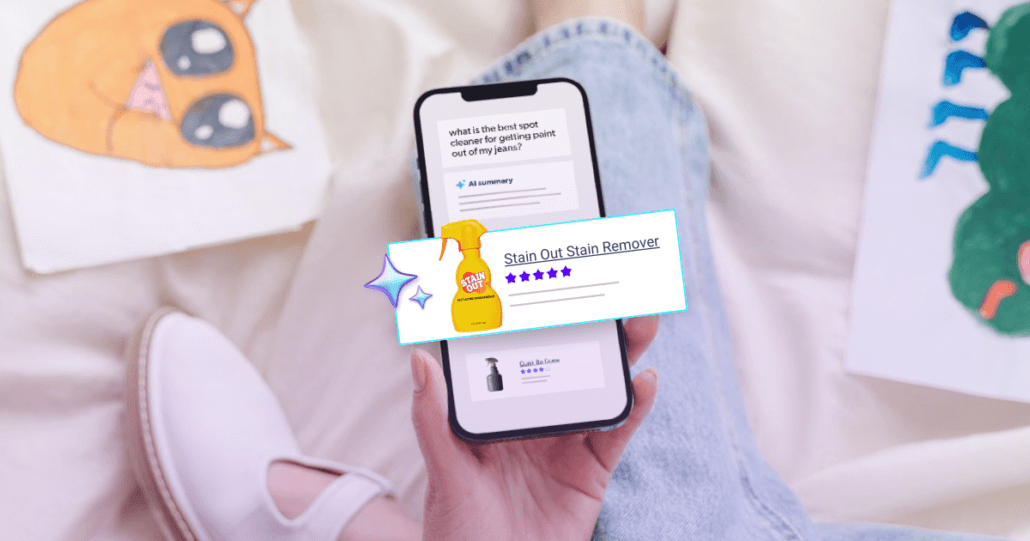
Shoppers are spending less time scrolling through pages of search results. They’re turning to AI platforms like ChatGPT, Gemini, Claude, and Perplexity to research products, compare options, and get direct recommendations.
The same principles apply whether you sell physical goods or subscriptions, since both face the same discovery problem as AI reshapes how customers find and evaluate them.
This is no longer early-adopter behavior. 74% of shoppers now use AI for some form of product discovery, according to NielsenIQ and Kearney research. And 62% of AI-enabled shoppers use AI specifically to compare options — brands, models, prices, and reviews (McKinsey). Comparison prompts are now the default path to purchase.
This means your marketing strategy needs to evolve from just focusing on classic SEO to include generative engine optimization (GEO) tactics.
What brand visibility means in the age of AI
Visibility in AI search isn’t the same as visibility in traditional search.
In a classic search results page, visibility means ranking high enough to be clicked. In AI search, it means your products appear in AI-generated recommendations, show up in comparison answers, and are described accurately based on real customer experience.
And the way we measure is changing with it. NielsenIQ frames the new KPIs as share of conversation and share of recommendation — how often your brand is surfaced and suggested inside AI-mediated conversations — with share of trust coming next. These metrics ask a different question than traditional search rank does: not “where do you appear on a results page,” but “does the model know you, believe you, and recommend you.”
For that to happen, AI models need to understand exactly what your product is, who it’s for, how it performs in real use, and how it compares to alternatives.
NielsenIQ’s analysis of AI-driven product discovery is blunt about why most brands fall short here: their underlying product data isn’t structured or consistent enough to be found, trusted, or recommended. This is the part most teams are struggling with. AI-readiness isn’t a content-volume problem you can solve by publishing more owned, created content — it’s a data problem.
NielsenIQ sums up the risk as “garbage in, garbage out.” When models can’t parse or reconcile your product information, brands get represented thinly, described inaccurately, or left out of the answer altogether.
Building trust with an AI model works much like building trust with potential customers: through consistent, verifiable proof, not brand adjectives. A strong brand claim without supporting data reads to a language model as noise, not signal.
Your checklist for better AI search visibility
Improving your presence in AI search engines isn’t just about being crawlable. It depends entirely on the quality, accessibility, and trustworthiness of the signals your brand sends out across the web. Pay attention to all three — AI models weigh them together, not independently.
Here’s a practical six-step workflow your teams can start using today:
- Audit how your brand appears in AI search engines. Start by testing category, product, and comparison prompts across major AI tools — a habit product teams should build into their regular workflow, since it shapes real purchase decisions. See if your brand shows up, verify if your product details are accurate, and check if customer sentiment is being fairly reflected compared to your competitors.
- Identify content gaps across PDPs, reviews, Q&A, and retailer listings. AI engines need specific, useful information, not vague marketing copy. The gap is bigger than most teams assume: only 66% of product detail page (PDP) content is visible to AI — the lowest of any retail page type, according to Adobe’s U.S. Retail AI Visibility Report Card. A third of the content you’re counting on to win the recommendation may never reach the model at all.
Look closely at your PDPs and partner sites. Do you have clear product descriptions, exact specifications, and explicit use cases? Address gaps where those details are missing, and check whether your existing created content actually matches what shoppers ask AI tools. - Strengthen authentic product proof through reviews, Q&A, and visual UGC. Brand copy can describe what a product does. UGC shows how it performs in real use, the version customers actually experience.Ratings and reviews capture the natural language customers use to describe products, language that often matches how shoppers phrase questions to AI assistants.
And the role of authentic proof doesn’t end once the AI has answered. In the Bazaarvoice and EMARKETER research, 78% of global shoppers on the hunt for a beauty or skincare product say seeing real customer verification — reviews and photos — remains very important even after an AI recommends a product. Verified customer content, not brand copy, is what closes the trust gap between an AI’s suggestion and a shopper’s purchase.
Focus on capturing natural language through customer reviews, surfacing exact buying concerns and pain points via customer Q&A, and showcasing your products in authentic contexts using photos and videos. - Work with SEO and web teams on structured schema and crawlability. Strong content has limited value to AI systems if it loads dynamically, is blocked by crawler rules, or is poorly structured. Collaborate with your technical teams to ensure your review schema and structured data are clean. Manage crawler access, robots.txt rules, and bot traffic carefully, so the AI crawlers you want are not blocked alongside the ones you don’t. Crawlability alone does not guarantee discoverability, but getting it right closes one of the most common gaps in AI search visibility.
- Syndicate product content and UGC across the digital shelf. AI search tools look at the entire digital shelf, not just owned brand sites. Ensure your product content and UGC are consistent and widely distributed across brand sites, retail marketplaces, and discovery channels. The wider and more consistent your presence, the more signals AI systems have to draw from.
Consistency here isn’t just cosmetic. NielsenIQ warns that conflicting claims across a PDP, a brand site, and retailer listings erode an AI model’s confidence in a product altogether. The model doesn’t pick one version of the truth, it discounts all of them. Syndication is how you keep one verified, consistent story in front of every system that might be asked about you. - Create an ongoing AI visibility workflow. Treat AI visibility as a continuous discipline within your broader content strategy, not a one-time project. Build a regular cadence for refreshing UGC, monitoring how your products appear in AI summaries, and tracking how your representation changes over time. The brands that build this into their operating rhythm will likely earn an advantage over those who treat it as a launch and finish line.
How Bazaarvoice can help
Bazaarvoice helps enterprise brands source, display, and amplify the authentic customer signals that support discovery and trust across the digital shelf.
We help build the foundations that make your brand easier for AI systems to find, interpret, and represent accurately.
Here’s what we help brand teams put in place:
- Collect authentic ratings, reviews, and visual UGC that reflects the natural language shoppers use in AI prompts.
- Generate fresh product feedback through sampling programs that keep your content current at launch and beyond.
- Surface and answer critical customer questions via managed Q&A so common purchase hesitations get addressed on the product page.
- Syndicate your customer content across a global retail network, so your signals reach the touchpoints where AI systems query first.
- Deliver structured, machine-readable product truth with the Bazaarvoice Authentic DiscoveryTM API — verified UGC formatted as structured JSON-LD, feeding the AI and search pipelines that decide what gets recommended.
What this looks like in practice
AI platforms are looking for a reason to trust your products. They scan the web looking for explicit product facts, consistent signals, and honest customer experiences to support the recommendations they generate.
Moving from keyword-led discovery to AI prompt-led recommendations is not a quick technical patch or a one-time project. It’s a continuous commitment to building authority across the digital shelf.
When you put clean, structured product data and real customer evidence in front of AI systems consistently, you give those systems what they need to understand, trust, and accurately represent your brand.
Every step above points to the same conclusion: stronger brand visibility in AI search comes from structure and proof, not from publishing more marketing copy.
The e-commerce playbook is changing, the core objective is not. Be where your shoppers are looking, in the way they’re looking.